

Psyllium vs inulin vs resistant dextrin really comes down to your day. Psyllium sets into a thick gel you’ve got to drink fast with a full glass of water. Inulin can leave you gassy. Resistant dextrin just dissolves, so it’s the one that’s easiest to keep up every day.
You’ve probably told yourself to eat more fibre. Most of us have.
And then the week happens. You grab a bun on the way to the MRT, lunch is a quick plate near the office, and by the time you’re home, nobody’s thinking about vegetables.
So you look at fibre supplements, and that’s where it gets confusing. The three names you’ll see most are psyllium, inulin and resistant dextrin. On paper they sound alike. Once you actually try them, they’re nothing alike.
This guide is about what each one is like to live with, so you can pick the one you’ll still be taking next month. Fair warning: ADVAGEN Prebio is our own product, and it’s a resistant dextrin fibre. We’ll tell you straight where it fits, near the end.
Key takeaways
- Psyllium thickens fast. You drink it quickly with a full glass of water and keep it away from your medicines.
- Inulin gets fermented quickly in the gut, so it’s the one most likely to make you gassy.
- Resistant dextrin dissolves with no gel. You stir it in and get on with your morning.
- Whichever you pick, start small and build up over two to three weeks.

Psyllium vs inulin vs resistant dextrin at a glance
All three are soluble fibres. What’s different is what each one asks of you, day after day.
| Psyllium | Inulin | Resistant dextrin | |
|---|---|---|---|
| In your drink | Thickens into a gel; drink it straight away | Dissolves | Dissolves, no gel |
| In your gut | Barely fermented; keeps its gel | Fermented quickly | Fermented by gut bacteria |
| Gas | Less likely | Most likely of the three | Less than inulin in lab tests |
| What it asks of you | A full glass of fluid each time, and spacing from medicines | A gut that copes with gas | A quick stir |
Psyllium: the fibre that turns into a gel
Psyllium husk soaks up water and turns into a thick gel. That’s just how it works.
The catch is everything around it. You mix it, then you drink it before it sets. A major cancer centre’s patient guide says to take it with at least 240 mL of fluid every time, because the powder can swell and block the throat if you don’t drink enough.
The same guide says to keep your other medicines two hours away from psyllium, since it can stop some of them from being absorbed.
That’s fine on a slow Sunday. On a Tuesday morning when you’re rushing out the door? Not so much.
Inulin: the prebiotic that often brings gas
Inulin usually comes from chicory root, and it’s a well-known prebiotic. Think of it as food for the bacteria that already live in your gut.
The trade-off is speed. Your gut bacteria ferment inulin quickly, and quick fermentation means gas. In lab tests that put inulin, psyllium and wheat dextrin side by side, inulin made the most gas.
If your gut takes it in its stride, great. If you’re the type who feels it by mid-afternoon at your desk, inulin probably won’t be the easy start you were hoping for.
Resistant dextrin: the one that dissolves and stays out of the way
Resistant dextrin, also called resistant maltodextrin, is a soluble fibre made from starch, often corn or wheat. It dissolves without thickening.
That’s really the whole point. Stir it into a glass of water, the drink you have at breakfast or your bowl of porridge, and carry on. You don’t have to gulp it down, and you don’t have to plan around it.
How much is too much? Most people can take more than a sachet or two a day before extra wind shows up. If you’d like the numbers, our guide on how much resistant dextrin is too much walks you through them.
It’s a prebiotic fibre too. Your gut bacteria ferment it in the large bowel. There’s more on that in what happens when gut bacteria ferment fibre.
Is resistant maltodextrin the same as maltodextrin?
No. The names are almost the same, and that trips a lot of people up.
Ordinary maltodextrin is a digestible carbohydrate that’s used to thicken and sweeten foods. Research done in Singapore found a maltodextrin drink behaved much like plain glucose in the body.
Resistant maltodextrin is different. It’s processed so your small intestine can’t digest it, and that’s why it counts as fibre. The US Food and Drug Administration lists resistant maltodextrin/dextrin among the carbohydrates it intends to count as dietary fibre.
So when you’re shopping, look for the word “resistant” on the label.
Does resistant maltodextrin cause diarrhoea?
Not at normal amounts. If you overdo any fibre, you’ll usually notice a bit of extra gas or gurgling first. That’s your cue to cut back.
Which fibre fits your day?
The fibre that works is the one you’ll actually keep taking. So ask yourself three things.
- Will you drink a full glass with every dose? Psyllium needs it every time. If you usually take your fibre on the go, that gets old fast.
- Do you take daily medicines? Psyllium has to be kept two hours away from them, so each dose needs a bit of planning.
- Does gas bother you? Inulin ferments fastest of the three, so it’s the most likely to leave you windy.
If your honest answer is “I just want more fibre without changing my routine”, resistant dextrin is probably your one.
Food still comes first, of course. A supplement just fills the gap on days your plate falls short. For tips on reading the label, see how to choose a fibre supplement.
How to start any fibre supplement without the discomfort
Most fibre trouble comes from starting too fast. Go easy on yourself.
- Start small. A few grams a day in the first week is plenty. Then build up slowly.
- Give your gut two to three weeks. SingHealth says a sudden jump in fibre can leave you bloated from gas, so raise it gradually.
- Drink water through the day. Fibre works with water. With psyllium, that full glass every time isn’t optional.
- Tie it to something you already do. Your breakfast drink, your first water bottle at work, your morning oats.
- See a doctor if something feels wrong. Blood in your stool, an unexplained change in body weight, severe pain or a change in bowel habit that lasts for weeks needs a doctor, not a new supplement.
Where ADVAGEN Prebio fits
Yes, this is our own product, so take this part for what it is. We’d still rather you pick the fibre that suits you than the one we sell.
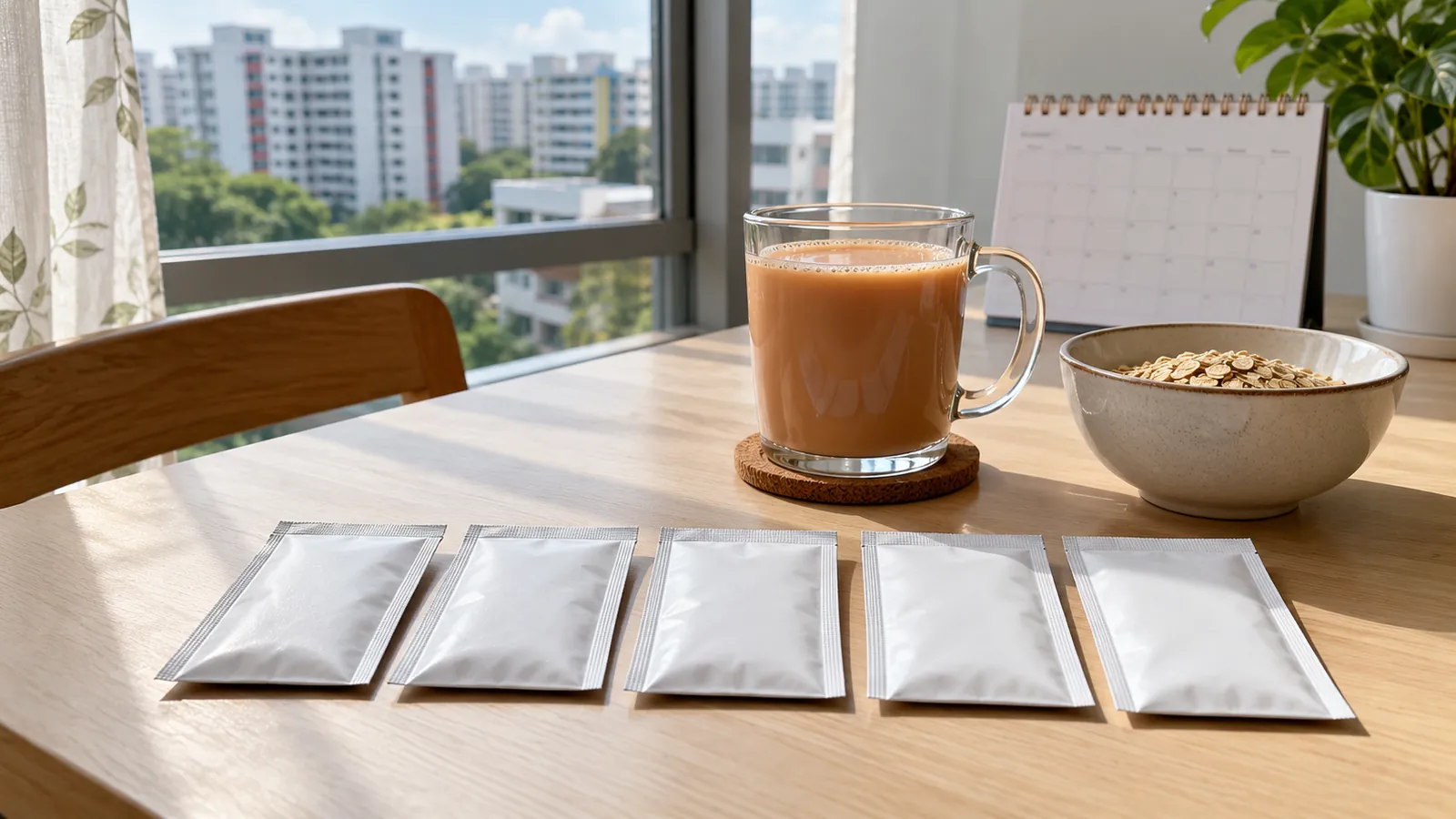
If resistant dextrin sounds like your kind of fibre, though, ADVAGEN Prebio is the one we’d point you to. It’s a plant-based soluble prebiotic fibre, and its one ingredient is resistant dextrin from corn. You tear a sachet, add it to the food or drink of your choice and stir until it dissolves. It doesn’t form a gel, and it doesn’t change the taste or texture.
What’s in the box
- Ingredient: resistant dextrin, a soluble prebiotic fibre from corn.
- What it does: helps you add soluble fibre to your daily diet. Each sachet gives you 5 g of dietary fibre.
- How it mixes: dissolves and mixes easily into the food or drink of your choice; no gel, and no change to taste or texture.
- Label: sugar-free and gluten-free.
- How to take it (product page directions): adults 1 to 4 sachets a day; children ½ to 1 sachet a day; for children under 6, ask a paediatrician first.
- Pack: 30 single 5 g sachets, small enough for a bag or a desk drawer.
Want to give a no-gel fibre a go?
Where to buy ADVAGEN Prebio
5 g sachetSugar-freeGluten-freeNo gel
SGD 29.60 for 30 sachets SGD 36.00
That’s about SGD 0.99 a sachet. Price checked on 25 October 2026; the shop page shows the current price and stock.
Dietary fibre supplement. Not intended to diagnose, treat, cure or prevent any disease.
The shop button takes you to the ADVAGEN Prebio product page, where you’ll see the current price and stock. The Amazon button opens ADVAGEN’s own listing on Amazon.
FAQ
How do I choose between psyllium husk, inulin and other fibre types?
Start with your day, not the label. Can you drink a full glass with every dose? Do you take daily medicines? How does your gut cope with gas? Psyllium needs the glass and the medicine planning, and inulin brings the most gas. If you want a fibre that slips into what you already eat and drink, resistant dextrin is the easy one.
Is maltodextrin a fibre?
Ordinary maltodextrin isn’t. It’s a digestible carbohydrate your body breaks down much like sugar. Resistant maltodextrin is the fibre version: it isn’t digested in the small intestine and reaches the large bowel, where gut bacteria ferment it. Check the ingredient list for the word “resistant”.
Is psyllium soluble or insoluble fibre?
It’s a soluble fibre that forms a gel. Unlike most soluble fibres, it’s barely fermented by gut bacteria, so the gel stays put through the large bowel. Inulin and resistant dextrin dissolve fully and do get fermented.
Which fibre supplement causes the most gas?
Of these three, inulin, because it ferments fastest. Any new fibre can bring a little wind at first, so start small, build up over two to three weeks and drink water through the day.
Can I take resistant dextrin every day?
Yes, it’s meant for everyday use. The ADVAGEN Prebio product page gives adults 1 to 4 sachets a day and children ½ to 1 sachet a day, and says to ask a paediatrician first for children under 6. It’s easiest to stick with if you take it at the same point each day, like your first drink of the morning.
Can I take a fibre supplement with my medicines?
Ask your doctor or pharmacist, especially if you take regular medicines. Psyllium can stop some drugs from being absorbed, which is why patient guides tell you to keep other medicines two hours apart from it.
Is resistant dextrin safe?
Follow the amounts on your pack. The usual side effect, as with any fibre your gut bacteria ferment, is extra wind when you take a lot at once or add it too fast. SingHealth says raising fibre slowly over two to three weeks helps keep bloating down. If you’re pregnant, take regular medicines or manage a health condition, check with your doctor or pharmacist first.
Read next: what resistant dextrin is and how much is too much, or 7 checks before you buy a fibre supplement.
Sources
- SingHealth: High fibre diet
- Memorial Sloan Kettering Cancer Center: Psyllium (patient guide)
- US FDA: Questions and answers on dietary fiber
- PubMed 20482283: fibre fermentation and gas, lab comparison
- PubMed 32235569: maltodextrin and blood glucose (Singapore)
This article is general information, not medical advice. ADVAGEN Prebio is a dietary fibre supplement and is not intended to diagnose, treat, cure or prevent any disease. Speak to a doctor or pharmacist about your own health.




Share this article:






[…] from meals, a fibre supplement can top up your day. Fibres behave differently, and our guide to psyllium vs inulin vs resistant dextrin compares […]