

If your elderly parent isn’t getting enough fibre, you don’t need a big diet overhaul. Add a little fibre to meals they already like, keep drinks coming through the day and get them walking a bit. If food still falls short, pick a fibre supplement for the elderly that slips quietly into what they already eat and drink.
Maybe you’ve noticed it on your weekend visits. Mum’s switched to porridge and soft bread. Dad pushes the vegetables aside because they’re hard to chew. And they’re both drinking less, so they don’t have to get up at night.
Then one day you hear it, said quietly: “I haven’t gone for days.”
It’s awkward to talk about. But it’s very common in older adults, and the first steps are often simpler than you’d think. Below you’ll find an easy routine to set up this week, the signs that mean a doctor should look first, and where a fibre supplement fits in.
Key takeaways
- Small swaps at familiar meals add fibre without taking away what your parent enjoys.
- Drinks spread through the day matter as much as food, unless their doctor has set a fluid limit.
- A short walk and a quick medicine check with the pharmacist go a long way.
- Some signs need a doctor first: blood in the stool, an unexplained drop in body weight, severe tummy pain or a change that won’t settle.
- When meals still fall short, a soluble fibre that mixes into food or drinks they already have is the easiest top-up.
Why it gets harder as parents get older
Our gut slows down as we age. Singapore General Hospital’s geriatric team explains that slower digestion, moving less, drinking less and a low-fibre diet all add up. Some medicines don’t help either.
Look at an ordinary day and you’ll probably spot the gaps:
- Soft, plain food. Porridge, white bread and soft noodles are easy to eat, but they’re light on fibre.
- Not enough to drink. Some older adults cut back so they don’t have to keep going to the toilet.
- More sitting. Sore knees and hot afternoons keep them at home.
- More medicines. Khoo Teck Puat Hospital lists certain painkillers and blood pressure medicines, plus iron and calcium supplements, among the usual culprits.
The good news? You can ease most of these gently, one small change at a time.
And if soft meals leave your parent short on fibre most days, a soluble fibre such as ADVAGEN Prebio can go into the drinks or porridge they already have. We’ll come back to that further down.
How much fibre does your parent need?
HealthHub keeps it simple: 20 g a day for women and 26 g for men.
A soft, home-style day of porridge, white bread with kaya and a small plate of noodles usually falls well short. You don’t have to count grams, though. Just look at each meal and ask yourself where the fibre is.
Wondering what to look for in a fibre supplement? Our guide on how to choose a fibre supplement takes you through the label.
An easy daily routine you can start this week
Pick two or three of these to start. A small habit your parent keeps beats a big plan they’ve dropped by next Sunday.
1. Add fibre to the meals they already love
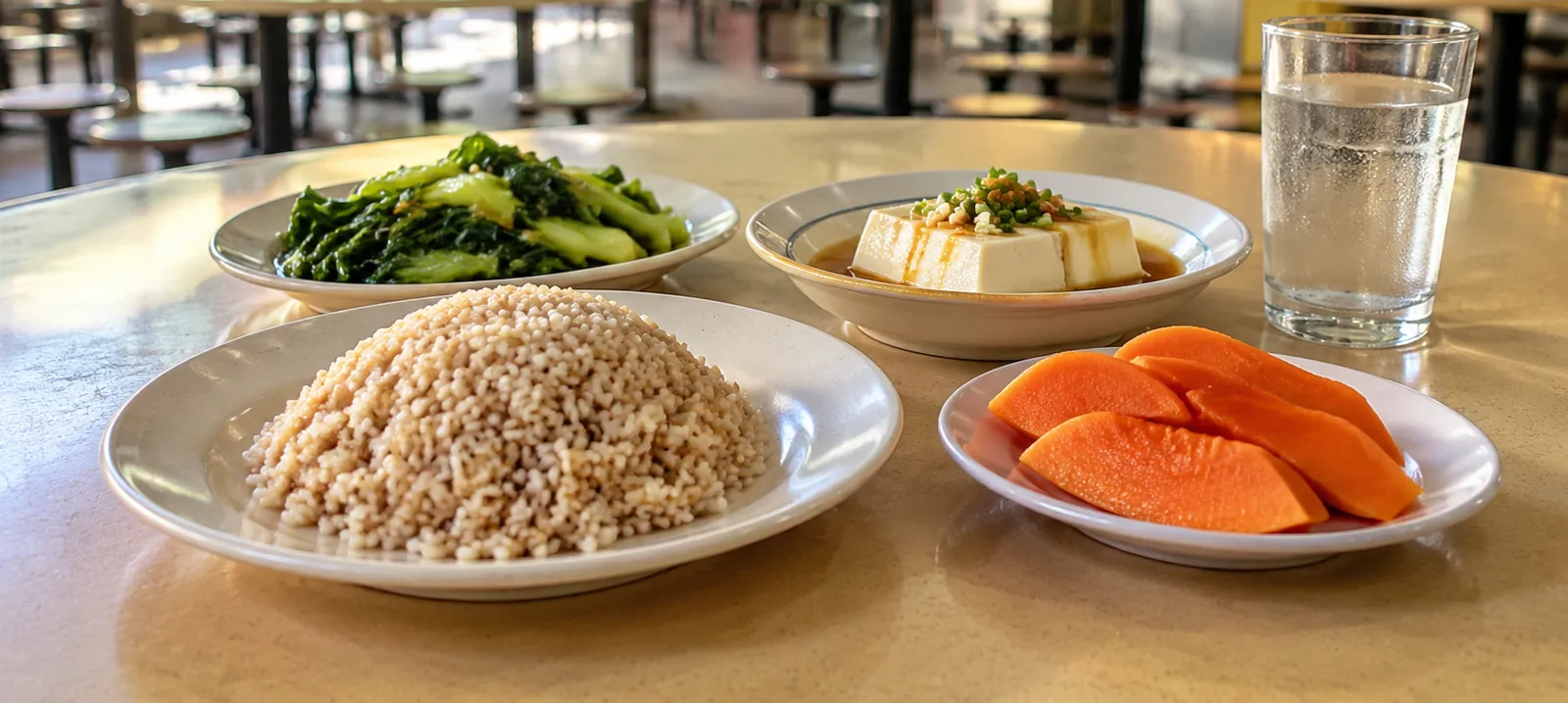
Swap, don’t replace. Brown rice instead of white, wholemeal bread instead of white, as HealthHub suggests. If chewing’s a problem, keep it soft:
- Cook brown rice or oats into porridge.
- Stir mashed pumpkin, carrot or sweet potato into porridge and soup.
- Go for soft-cooked greens like spinach or chye sim, chopped small.
- Add a spoonful of soft lentils or beans to the soup pot.
2. Keep soft fruit within reach
Kiwi, prunes and dragon fruit are good picks, and ripe papaya and banana are easy to chew. Cut a plate and leave it on the table. Fruit that’s ready to eat gets eaten.
3. Spread drinks through the day
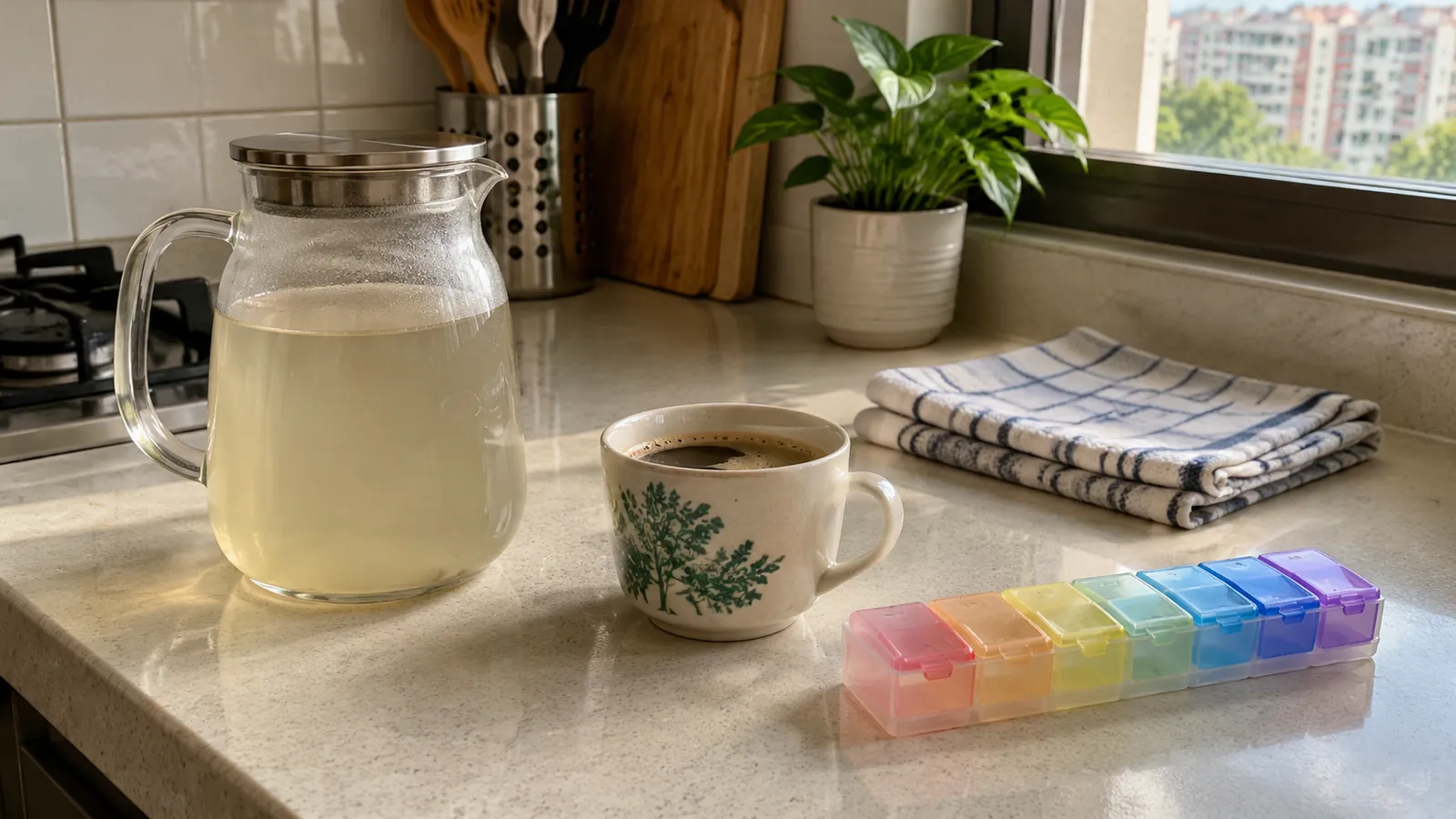
Fibre works best with fluid. Offer something with every meal: warm water in the morning, a glass of barley at lunch, soup at dinner. Keep most drinks earlier in the day so nights stay comfortable. If your parent has a heart or kidney condition, check with their doctor first, because some people are told to limit fluids.
4. Add a short walk
Gentle movement helps the gut along. A walk to the void deck, the wet market or the park after breakfast is a great start. If going out’s hard, chair exercises or a few slow laps around the flat still count.
5. Ask the pharmacist about their medicines
Take the full medicine list, supplements included, to the pharmacist. Ask whether anything could be slowing things down, and what time of day each one’s best taken. Never stop a prescribed medicine on your own.
6. Make the toilet easy
Give your parent unhurried time at about the same time each day, say after breakfast. A grab bar helps if balance is a worry.
7. Go slowly
Add one change at a time and give it a week or two. HealthHub advises adding fibre gradually, because too much at once can bring wind and discomfort.
What a fibre-friendly day can look like
Not sure how it all fits together? Here’s one easy example, built on food most Singapore families already have at home. Swap in your parent’s own favourites.
- Breakfast: oat or brown rice porridge with mashed pumpkin, and a cup of warm kopi or teh.
- Mid-morning: a few slices of ripe papaya or a banana, with a glass of warm water.
- Lunch: brown rice or wholemeal bread, soft-cooked greens and a bowl of soup, with a glass of barley.
- Afternoon: a kiwi or a couple of prunes, and a short walk while it’s still cool enough.
- Dinner: soft fish or tofu, more vegetables and a light soup, with smaller drinks so nights stay comfortable.
You don’t have to change every meal at once. Start with breakfast, since it’s usually the easiest to adjust, then move on to lunch the week after. If your parent eats very little, keep portions small and focus on fruit and soft vegetables they already like.
Eating out? Most hawker centres make this easy. Ask for extra vegetables, choose brown rice where the stall has it, and stop for cut fruit on the way home.
When to see a doctor first
A routine helps with everyday sluggishness, but some signs need a doctor before anything else. Take your parent to their GP or polyclinic if you notice:
- Blood in the stool
- An unexplained drop in body weight
- Severe tummy pain
- A sudden change in bowel habits, or a change that lasts more than six weeks
- No improvement after about three weeks of changes
- Trouble swallowing, or a doctor’s limit on how much they may drink
If your parent already uses laxatives, talk to their doctor before changing anything.
Why ADVAGEN Prebio fits easily into a parent’s day
Even with good meals, plenty of older parents still fall short on fibre. If that sounds like yours, ADVAGEN Prebio is worth a try. It’s a plant-based soluble prebiotic fibre from corn (resistant dextrin), and it helps you add soluble fibre to your parent’s daily diet without changing their routine.
Why it’s easy to live with:
- It goes into what they already have. Stir a sachet into the drink or porridge they already have. It dissolves and mixes in an instant.
- The taste stays the same. Prebio doesn’t change the taste or texture of food and drinks.
- No thick drink to finish. It’s soluble and doesn’t form a gel, so your parent can sip at their own pace.
- A short label. Sugar-free and gluten-free, with no artificial colourings, flavourings or preservatives.
- No measuring. Each 5 g sachet is ready to tear and pour, and gives 5 g of dietary fibre.
How to start: the label directions for adults are 1 to 4 sachets a day. Start with 1 sachet a day for a week, then add more if you need to, with drinks spread through the day.
Want an easy way to top up your parent’s fibre?
No gel, no gloop
Where to buy ADVAGEN Prebio
5 g sachetSugar-freeGluten-freeNo gel
SGD 29.60 for 30 sachets SGD 36.00
That works out to about SGD 0.99 a sachet. Price checked on 25 October 2026; the shop page shows the current price and stock.
Dietary fibre supplement. Not intended to diagnose, treat, cure or prevent any disease.
You’ll find the current price and stock on the shop page, and Prebio is on Amazon too. There’s more about it on the ADVAGEN Prebio home page.
FAQ
What is the best fibre supplement for elderly parents?
The one your parent will happily take every day. For most older adults, that’s something that mixes into a drink they already enjoy, doesn’t turn thick and doesn’t change the taste. Start with food swaps and fluids, add a supplement if meals still fall short, and check the timing with their pharmacist.
Is it normal to get a bit of wind at first?
It can happen when fibre goes up quickly. HealthHub advises adding fibre gradually, so change one thing at a time and give each step a week or two. If the discomfort’s severe or doesn’t settle, see a doctor.
How much water should my parent drink?
Offer a drink with every meal and in between, and keep most of it earlier in the day. HealthHub’s general guide for adults is 6 to 8 glasses, about 2 litres a day, unless a doctor says otherwise. If your parent has a heart or kidney condition, ask their doctor first, because some people are told to drink less.
My parent finds vegetables hard to chew. What can I do?
Cook them longer and chop them small, or blend them into soups and porridge. Pumpkin, carrot, sweet potato and spinach all go soft and mild. Ripe fruit like papaya and banana counts too, and it’s easy to eat between meals.
How soon will we notice a difference?
Give each change a week or two. If nothing’s better after about three weeks, see a doctor. Go straight away for blood in the stool, an unexplained drop in body weight or severe tummy pain.
Can my parent take a fibre supplement with their medicines?
Check the timing with their pharmacist first, especially for regular medicines. Some fibres, like psyllium, can stop certain medicines from being absorbed properly, so patient guides say to keep other medicines two hours apart from it. Bring the fibre supplement along when you show the pharmacist their medicine list.
Can my parent take a fibre supplement every day?
Yes, if it suits them and their doctor has no concerns. Follow the label: for ADVAGEN Prebio, the directions for adults are 1 to 4 sachets a day. Start with one, and keep drinks spread through the day.
Read next: what fibre is good for constipation, or what resistant dextrin is.
Sources
- HealthHub: Boost your health, the essential benefits of dietary fibre
- HealthHub: Constipation in adults
- Singapore General Hospital, Geriatric Medicine: Bowel care resources
- Khoo Teck Puat Hospital: Constipation in the elderly
- PubMed 27933718: constipation in older people, consensus statement
- NHS: Constipation
This article is general information, not medical advice. ADVAGEN Prebio is a dietary fibre supplement and is not intended to diagnose, treat, cure or prevent any disease. Speak to a doctor or pharmacist about your own health, or your parent’s.




Share this article:





[…] on its own it isn’t one of the warning signs above. Caring for an older parent? Our guide on fibre for elderly parents covers what to watch […]