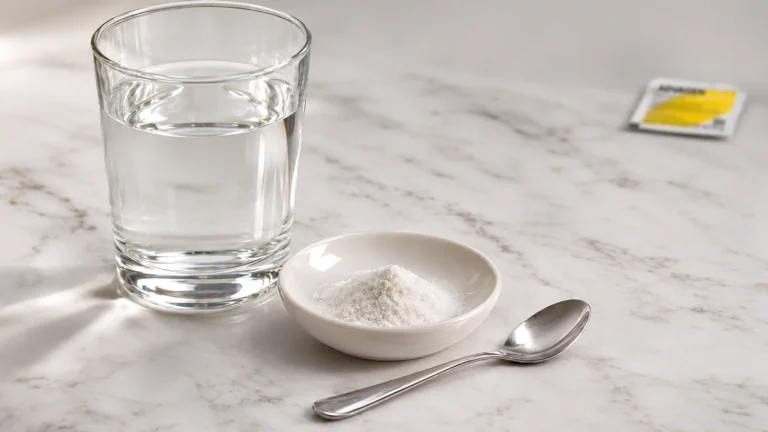


You’ve got a fiber sachet with your morning drink. Then someone says it’s “not good long term”, or that your body will get lazy. So, is it OK to take a fiber supplement every day? SingHealth notes that there are many fiber supplements available and that a doctor may recommend one. What matters is the label dose, enough fluids, timing around medicines and knowing when to see a doctor.
Key takeaways
- The average Singaporean eats far less fiber than recommended, so a daily top-up makes sense.
- Fiber and stimulant laxatives are different things. The short “7 days” limits you may have read are for laxatives, fiber-based ones included, taken for constipation without a doctor’s advice.
- Drink regularly, start low and build up slowly, and space fiber from medicines as your pharmacist advises.
- If you need something for constipation every few days, see a doctor rather than taking more.
Is it OK to take a fiber supplement every day?
Yes, daily is the normal way to use fiber. Your body needs fiber every day, and a supplement is one way to get some of it. SingHealth notes that “your doctor may recommend such supplements to you if necessary”.
What about the long term? The NHS page on ispaghula husk, a common fiber product, says that if you take it to increase the fiber in your diet, your doctor may recommend taking it for many months.
SingHealth also answers the “too much” worry: too much fiber isn’t harmful in itself, but a balanced diet matters, and a sudden jump can cause bloating from gas. So how you start counts for more than the word “daily”.
How much fiber do you need in a day in Singapore?
More than most of us eat. SingHealth puts the average Singaporean at about 13 g a day.
The official targets vary a little depending on which page you read:
- HealthHub’s fiber page: 20 g for women and 26 g for men
- HealthHub’s constipation page: about 25 to 30 g a day
- SingHealth: 30 g a day
Whichever number you go by, that leaves a gap of 7 g or more from the 13 g average. Food should do most of the work: wholegrains, vegetables, fruit, beans and lentils. A supplement fills in what your meals miss, on days when lunch is chicken rice and dinner is a quick bowl of noodles.
Fiber is not the same as a stimulant laxative
A lot of the worry comes from mixing up fiber with stimulant laxatives. The NHS lists four types of laxative, and they work in different ways:
| Type (NHS) | How the NHS says it works |
|---|---|
| Bulk-forming (fiber-based) | Adds fiber to poo, which helps make it bigger and softer so the bowel muscles push it out |
| Stimulant | Makes the bowel muscles squeeze to move stool along |
The NHS also says that laxatives bought without a prescription shouldn’t be taken for longer than 7 days, and that using laxatives too often or for too long can cause problems. That advice is about laxatives used for constipation, and MedlinePlus gives a similar limit for psyllium: “Do not take psyllium for longer than 1 week unless your doctor tells you to.” Adding fiber to your diet is a different goal: the NHS page on ispaghula husk says your doctor may recommend it for many months for that.
As for the worry that your body will “get lazy”: we couldn’t find an official page that says fiber does or doesn’t cause dependence, so we won’t make that claim either way. If you feel you can’t go without something, talk to a doctor about it.

Can fiber affect your medicines?
It can, so timing matters. NHS guidance on ispaghula husk says it can change how well your body absorbs other medicines, vitamins and supplements.
Advice on the gap isn’t the same everywhere. One NHS page says at least 30 minutes before or after other medicines, another says more than an hour, and MedlinePlus gives 3 hours for some specific medicines. All of these are about husk-type fiber, not every fiber product.
So rather than picking a number from the internet, ask your pharmacist what gap suits your medicines. If you take something every day, mention your fiber supplement too. Our guide on fiber supplements and medicine timing has more on this.
A simple daily-use checklist
- Follow the label dose. The directions on your pack set your daily amount. Don’t go above them.
- Start low, build up slowly. SingHealth suggests increasing fiber over 2 to 3 weeks. HealthHub notes that husk fiber can bring wind or bloating, especially in the first few days of taking it.
- Drink regularly. HealthHub suggests a minimum of six to eight cups of fluid a day. See how much water to drink with a fiber supplement.
- Space it from medicines. Ask your pharmacist for the right gap.
- Keep food first. A sachet tops up your meals. It doesn’t replace vegetables, fruit and wholegrains.
- Check in with yourself. If you need something every 2 to 3 days just to go, or anything on the list below shows up, see a doctor.
When to stop and see a doctor
HealthHub and the NHS list signs that need a doctor, not more fiber:
- Blood in your stools, or black or sticky stools
- Very bad stomach pain or cramping
- A sudden change in your bowel habits, especially if your weight is also dropping
- Your weight dropping without trying
- Constipation still there after a week, or getting worse
- Needing constipation medicine every 2 to 3 days or more often
Check with a doctor or pharmacist before you start, too, if you’re pregnant or breastfeeding, have a heart condition, have trouble swallowing or have a digestive condition. The NHS lists these for laxatives, and the same care makes sense for any supplement.

Where ADVAGEN Prebio fits
If you’re looking for a fiber that’s easy to take every day, ADVAGEN Prebio is one option. It’s a plant-based soluble fiber from corn (resistant dextrin). It doesn’t form a gel and doesn’t change the taste or texture of your food or drink. You stir a sachet into whatever you’re drinking until it dissolves.
The product page says adults can take 1 to 4 sachets daily. For children, follow the label and check with your doctor or pharmacist first. SingHealth’s general advice for any added fiber is to build up slowly over 2 to 3 weeks. If you’re pregnant, take regular medicines or have a health condition, check with your doctor or pharmacist before you start.
ADVAGEN Prebio
Soluble fiber in 5 g powder sachets, 30 sachets per pack. SGD 29.60 in the official ADVAGEN shop (price checked 18 November 2026).
- See the product page for the directions
- Have a question first? Ask us on WhatsApp
If you’re still comparing, our guides on how to choose a fiber supplement and psyllium vs inulin vs resistant dextrin go through the options.
FAQ
Can you take fiber supplements long term?
Sometimes, yes. For husk fiber taken to add fiber to your diet, the NHS says your doctor may recommend it for many months. Stick to the label dose, drink enough and keep food first.
How much fiber supplement should I take a day?
Follow the directions on your pack. For ADVAGEN Prebio, the product page says 1 to 4 sachets daily for adults. SingHealth’s general advice is to add fiber slowly over 2 to 3 weeks.
What are the side effects of taking fiber every day?
The official pages mention wind or bloating, especially in the first few days or if you increase too fast. SingHealth suggests building up over 2 to 3 weeks. Our page on ADVAGEN Prebio side effects covers Prebio specifically.
Will my body get used to fiber and stop working on its own?
The official health pages linked here don’t give a yes or no on this for fiber. The NHS does treat fiber-based and stimulant laxatives as different types. If you feel you can’t go without help, see a doctor.
Is a fiber supplement the same as eating more vegetables?
No. Food gives you fiber plus everything else on your plate. A supplement helps you reach your daily fiber when meals fall short, but it isn’t a replacement for a balanced diet.
References
- HealthHub: constipation
- HealthHub: more fibre
- HealthHub: ispaghula husk medication leaflet
- SingHealth: high fibre diet
- NHS: laxatives
- NHS: how and when to take ispaghula husk
- NHS: ispaghula husk with other medicines and supplements
- NHS: constipation
- MedlinePlus: psyllium
- ADVAGEN Prebio: product page
This article is general information, not medical advice. ADVAGEN Prebio is a dietary fibre supplement and is not intended to diagnose, treat, cure or prevent any disease. Speak to a doctor or pharmacist about your own health.
Share this article: