

If you’ve taken probiotics for weeks and nothing has changed, check five things before you buy another bottle: the strain on the label, how long you’ve given it, the pack directions, the fiber on your plate and the water in your glass. Probiotics and fiber do different jobs, so more of one won’t cover a gap in the other.
You’re not alone in wondering about this. Plenty of people online ask whether probiotics do anything at all. The honest answer sits somewhere in the middle, and the checks below help you work out where you stand.
Key takeaways
- Probiotics vary a lot from product to product, so the strain on the label matters more than the brand name.
- Give one product a fair trial. For infrequent or difficult bowel movements, ISAPP suggests a four-week try; an NUHS article, writing about gut symptoms such as IBS, suggests at least four weeks and stopping if nothing changes after 12.
- A probiotic doesn’t count towards your fiber. Singapore’s target is 20 g a day for women and 26 g for men.
- Fiber needs water. HealthHub suggests six to eight cups of fluid a day, at minimum.
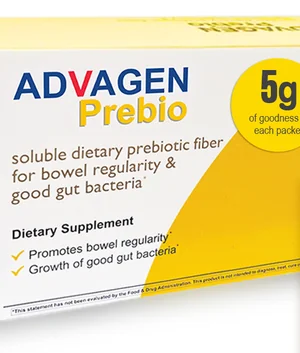
- If your fiber count is short, a soluble fiber sachet such as ADVAGEN Prebio can sit next to your probiotic. It doesn’t have to replace it.
Why a probiotic can seem to do nothing
The plain reason: not every probiotic does the same thing, and not every gut answers the same way. An NUHS article published in August 2025 puts it simply: probiotics are not a cure-all, and a product that helps one person may do little for the next. It also notes that probiotic products differ widely in their ingredients, their strains and how many organisms they hold.
So two bottles that both say “probiotic” can be quite different inside. ISAPP, the international science body for probiotics and prebiotics, describes a true probiotic as live microbes given at a specified dose, tested and shown to benefit health. That’s a high bar, and a pack that only says “good bacteria” doesn’t tell you whether it clears it.
There’s also a Singapore detail worth knowing. NUHS points out that the current rules here don’t require a minimum count of live organisms before a product can be called a probiotic. Reading the label is on you.
And one more honest line from that NUHS piece: people who are otherwise healthy might not need a probiotic supplement in the first place. That doesn’t mean yours is useless. It means “nothing changed” might simply mean there wasn’t much to change.
How long is a fair trial? Give one product at least four weeks before you judge it. ISAPP suggests a four-week try for people with infrequent or difficult bowel movements, and the time check below gives the stop point. If you’re still working out which kind of product suits you, our guide on choosing a probiotic or prebiotic supplement sets the two side by side.
The gap a probiotic can’t fill: fiber and water
A probiotic brings live microbes in. Fiber is a different thing, and a probiotic capsule doesn’t count towards it. HealthHub puts Singapore’s recommended fiber intake at 20 g a day for women and 26 g for men. Your probiotic adds nothing to that number.
The two do meet in the gut, though. NUHS notes that probiotics can ferment dietary fiber to make short-chain fatty acids. And ISAPP describes prebiotics as substances that feed the beneficial microbes in your gut. Most prebiotics are types of fiber, though not every fiber is a prebiotic.
Then there’s water. HealthHub’s page on constipation lists not having enough fiber and not having enough water or fluids among its possible causes. It suggests six to eight cups of fluid a day as a minimum, and it adds a warning: when you eat more fiber, drink more water too.
Think of a normal Singapore week. Kopi in the morning, a rice or noodle lunch at the hawker centre, dinner out with friends. A probiotic on top of that week is fine. It just doesn’t change how much fiber or water the week holds.
Five checks before you buy another bottle
If your probiotic hasn’t helped, check five things before you switch products, take more or give up: the strain, the time, the pack directions, your fiber and your water. Each check comes from a Singapore health body, ISAPP or the pack itself.
| Check | What to look at | Where the guidance comes from |
|---|---|---|
| 1. Strain | Is the specific strain named on the label, not just “probiotic” or “good bacteria”? | NUHS: look for the specific strain |
| 2. Time | Have you taken one product steadily for at least four weeks? | ISAPP and NUHS (details below) |
| 3. Directions | Are you taking it the way the pack says, with or without food, at the stated time? | HealthHub: follow the packaging instructions |
| 4. Fiber | Roughly how close does your day come to 20 g (women) or 26 g (men)? | HealthHub fiber target |
| 5. Water | Do you get through six to eight cups of fluid most days? | HealthHub |
About the time check. ISAPP, writing for people with infrequent or difficult bowel movements, says a four-week try of whichever probiotic they choose is reasonable, though the evidence is still limited. ISAPP also notes that only some probiotics seem to make a difference to bowel habits.
The NUHS article, writing about gut symptoms such as IBS, suggests sticking with a single strain for a minimum of four weeks. If 12 weeks pass with no difference, it says stopping may make sense.
About the fiber check. You don’t need an app. Picture yesterday’s meals and ask how many had vegetables, fruit, oats, barley, beans or wholegrains in them. If the honest answer is “one, maybe”, your fiber is probably short of the target, and that’s a separate job from whatever your probiotic is doing.
About the water check. Count what you actually drink across the day. If you add fiber, add water with it. Our guide on how much water to drink with a fiber supplement goes through it step by step.

When to stop and see a doctor first
Some signs are not for supplements at all. HealthHub’s constipation page says to see a doctor if it doesn’t get better within a week, or gets worse. See one too if you notice any of these:
- Blood in the stools
- Black or sticky stools
- A sudden change in your bowel habits, more so if you have also lost weight
- Very bad stomach pain or cramping
- Constipation alternating with diarrhoea
Also check with a doctor or pharmacist if you take regular medicines. HealthHub lists supplements like calcium or iron among the things that can affect how often you go. And NUHS adds that anyone with a weakened immune system or a serious illness should talk to their doctor before starting supplements.
If your stools are hard even though you go every day, our piece on hard stools even if you go every day covers what to look at.
Where a soluble fiber sachet fits
If check four showed your fiber is short, food comes first. HealthHub names foods such as oats and barley as good fiber sources. When meals still don’t get you there, a fiber supplement is a simple way to close the gap. It sits next to your probiotic; it doesn’t compete with it.
That’s the job ADVAGEN Prebio is made for. It helps you add soluble fiber to your daily diet, and each sachet provides 5 g of dietary fiber. Here’s the simple maths: if your target is 20 g, one sachet covers a quarter of it, and your meals carry the rest.
It’s also easy to live with. The product page describes it as soluble and not forming a gel, and says it doesn’t affect the taste or texture of food and drinks. It dissolves and mixes easily in an instant, so you can add it to the food or drink of your choice. The FAQ also describes it as unflavoured and taste-free.
Start slowly. HealthHub warns that piling on a lot of fiber too fast can upset the gut, so build up gradually and drink water with it. Our guides on taking a fiber supplement every day and what to expect in the first days help with the rest.
Who should check first? The Prebio FAQ lists abnormalities of the gastrointestinal tract as a reason not to take it. If you’re pregnant, take regular medicines or manage a health condition, follow the label and check with your doctor or pharmacist. If timing with other tablets matters to you, see fiber supplements and medicine timing.

ADVAGEN Prebio
Soluble prebiotic fiber, 5 g of dietary fiber per sachet, 30 single sachets per box. S$29.60 on the official ADVAGEN shop (price checked 26 November 2026).
- See the Prebio product page for the label and directions
- Want the bigger picture first? Start at the ADVAGEN Prebio home page
Still deciding between product types? Our guides on choosing a probiotic or prebiotic supplement, probiotic drinks and prebiotic fiber and how to choose a fiber supplement go deeper.
FAQ
Why are my probiotics not working?
Often it’s one of three things: the product doesn’t name a specific strain, it hasn’t had a fair trial yet, or the rest of your day is short on fiber and water. NUHS notes that probiotics vary widely between products and that what works for one person might not work for another. Run the five checks above before buying a new bottle.
How long should I take a probiotic before I stop?
Give one product at least four weeks. ISAPP suggests a four-week try for people with infrequent or difficult bowel movements. An NUHS article, writing about gut symptoms such as IBS, suggests at least four weeks, and stopping if there’s no change after 12 weeks. Changing products every few days makes it hard to tell what’s working.
Should I take a higher dose if nothing changes?
Not on your own. Stick to the dose on the pack and look at the label instead: the strain, and the number of live organisms, shown as CFUs. According to NUHS, a usual everyday amount sits between 1 and 10 billion CFUs. It also notes that probiotics can lose strength if they’re kept in heat or light, so store yours the way the pack says. If you’re unsure, a pharmacist can read the label with you.
Do I need a probiotic at all?
Maybe not. NUHS notes that people who are otherwise healthy might not need a probiotic supplement, because the gut already has its own mix of bacteria. If you like yours, keep it. Just don’t expect it to cover your fiber or your water, because those are separate jobs.
Can I take a fiber sachet with my probiotic?
They do different jobs, so one doesn’t replace the other. Follow the directions on each pack, start the fiber slowly with enough water, and ask a pharmacist first if you take regular medicines.
Is ADVAGEN Prebio a probiotic?
No. Prebio is a soluble prebiotic fiber, not live bacteria. A probiotic brings microbes in; a prebiotic fiber is fermented by the bacteria already living in your gut. That’s why the two can sit side by side in one routine.
References
- NUHS+: what probiotics can and cannot do
- ISAPP: probiotics and bowel habits
- ISAPP: What is a probiotic?
- ISAPP: What is a prebiotic?
- HealthHub: More fibre for a fit and fabulous you
- HealthHub: Constipation
- HealthHub: Probiotics
- ADVAGEN Prebio: product page
- ADVAGEN Prebio: FAQs
This article is general information, not medical advice. ADVAGEN Prebio is a dietary fiber supplement and is not intended to diagnose, treat, cure or prevent any disease. Speak to a doctor or pharmacist about your own health.
Share this article:




[…] If you’ve been taking probiotics for a while and noticed no change, see five checks before you buy another bottle. […]