


Resistant dextrin is a soluble fibre made from starch, such as corn, wheat or tapioca. Your small intestine doesn’t fully digest it, so most of it reaches your large intestine, where gut bacteria ferment it. How much is too much? Most people handle far more than a sachet or two a day. Extra wind mostly shows up when you take a lot at once or step up too fast.
So the better question isn’t “how much can I take?” It’s “how slowly should I build up, and am I actually reaching my daily fibre target?” Let’s sort out both, in plain words.
Why fibre is worth the effort
Fibre quietly does a lot for you. Here’s how HealthHub puts it:
- Regular bowel movements. Insoluble fibre adds bulk and helps keep you regular.
- Softer stools. Soluble fibre soaks up water, so stools are softer and easier to pass.
- Feeling full for longer. The bulk keeps you satisfied, which makes it easier not to overeat.
The target is 20 g of fibre a day for women and 26 g for men. SingHealth puts the average Singaporean at about 13 g. That’s a big gap, and it’s easy to see why when lunch is chicken rice and dinner is whatever’s quick. HealthHub’s one tip worth remembering: bring fibre in gradually, so your gut has time to adjust.
Can’t get there with meals alone? ADVAGEN Prebio is resistant dextrin in 5 g sachets that you add to the food or drink of your choice. See the price and stock.
What is resistant dextrin?
Resistant dextrin is a soluble dietary fibre made from starch. It dissolves completely in water. It’s called “resistant” because your digestive enzymes only manage to break down part of it in the small intestine.
You’ll see it under a few names:
- resistant dextrin
- resistant maltodextrin
- indigestible dextrin
- trade names such as Nutriose and Fibersol-2
US labels spell it “fiber”, so “resistant maltodextrin fiber” is the same thing. The starting starch varies from brand to brand. The resistant dextrin in ADVAGEN Prebio comes from corn.
It counts as real fibre, too. The US Food and Drug Administration says it intends to count “Resistant maltodextrin/dextrin” as dietary fibre on food labels.
Because it dissolves and doesn’t thicken, you’ll usually find it as a powder or in sachets. You stir it in and your drink stays a drink, not a sludge.
Is it the same as maltodextrin or resistant starch?
No. The names sound alike, but they’re three different things.
- Maltodextrin is a digestible carb, not fibre. Your body breaks it down much like sugar.
- Resistant dextrin (resistant maltodextrin) is processed so most of it isn’t digested in the small intestine. That’s what makes it a soluble fibre.
- Resistant starch is starch that escapes digestion in the small intestine. It’s a separate group, and what’s true for one isn’t automatically true for the other.
So when you read a label or a post, check which of the three it’s really about. The word “resistant” matters.
What happens to resistant dextrin in your gut
It passes through your stomach and small intestine mostly intact. Once it reaches your large intestine, bacteria get to work. Most of it gets used up along the way.
Fermentation makes two things you’ll want to know about. One is short-chain fatty acids, which we explain in what happens when gut bacteria ferment fibre. The other is gas. The US National Institute of Diabetes and Digestive and Kidney Diseases explains that gas forms when bacteria in your large intestine break down certain undigested carbs.
So with any fermentable fibre, the real question is comfort. How much you take, how fast you add it and the bacteria you already carry all shape how it feels. For the bigger picture, see what actually determines how fibre works.
How much resistant dextrin do people usually take?
There’s no one right number. What matters is how big your own fibre gap is and how your gut copes as you add more.
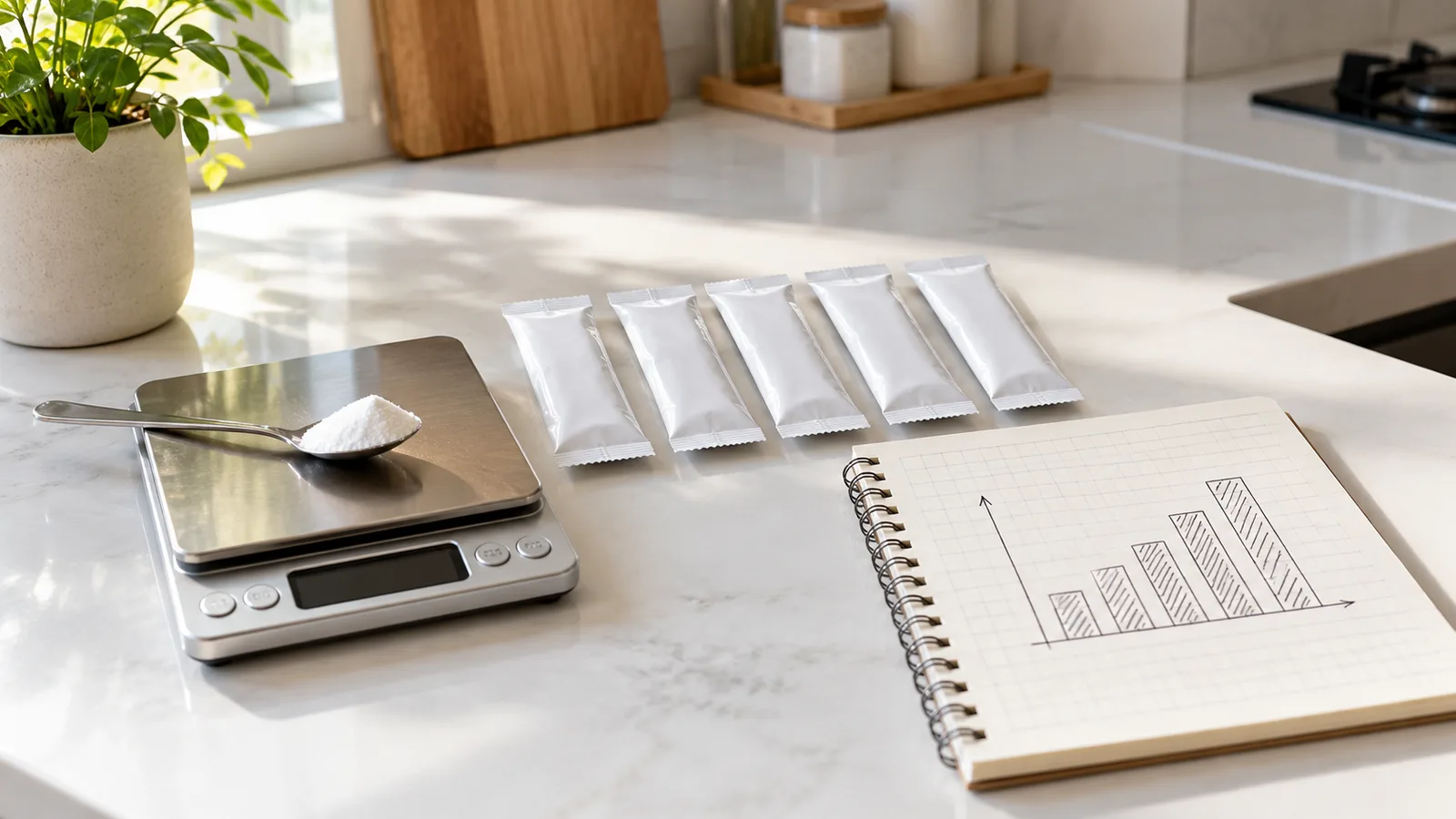
Your real starting point is the label on your own pack. For Prebio, that means 1 to 4 sachets a day for adults and ½ to 1 sachet a day for children, and a word with a paediatrician first for children under 6. Single sachets make it easy to start low and add one at a time.
Why too much at once can mean more gas
More fermentable fibre means more for your gut bacteria to chew on, and gas comes with that. Jump up suddenly and you’ll likely make more gas than your gut is used to. SingHealth says a sudden increase in fibre can leave you bloated from all that gas.
Most people handle a lot more than a sachet or two a day. Wind tends to show up when you take a lot in one go or step up too fast. Spreading the same amount across the day, and giving your gut a few weeks to settle, usually makes it easier.
One thing to remember: gas doesn’t mean the fibre is “working”. It just means the amount or the pace is more than your gut is happy with right now. Curious about the upper limit? Read whether you can take too much prebiotic fibre.
How to start slowly
Start with your total fibre, not the supplement. Then add resistant dextrin step by step.

- Fill the gap with food first. Wholegrains, beans, lentils, fruit and vegetables bring lots of different fibres, not just one. A supplement tops up what your meals miss.
- Follow the label. With Prebio, begin with one sachet a day. Adults can go up to 4 a day, so build up at your own pace.
- Take two to three weeks. SingHealth says bloating from extra fibre can be kept down by raising fibre slowly over 2-3 weeks.
- Split it across the day. The same total usually sits better in a few small servings than one big one. One sachet in the morning, another later if the label allows.
- Drink with your fibre, unless your doctor has told you to limit fluids.
- Change one thing at a time. Note when you started and how you feel. If wind stays uncomfortable, drop back to the last amount that felt fine.

Stopped for a while and want to start again? It depends on why you stopped. If a doctor’s looking after your symptoms, check with them first.
When to see a doctor
See your GP or polyclinic if gas or bowel changes come with any of these signs. Don’t just assume it’s your gut getting used to fibre.
- Blood in your stool, or black stool.
- An unexplained drop in body weight.
- A change in bowel habit that lasts for weeks.
- Severe or persistent pain.
- Symptoms in infants.
More fibre is never a substitute for a proper check-up. If you’re pregnant, take medication or manage a health condition, check with your doctor or pharmacist before you start any fibre supplement.
Get ADVAGEN Prebio
If you’ve decided resistant dextrin suits you, ADVAGEN Prebio is the easy way to have it. It’s our own product: one ingredient, resistant dextrin from corn, in single 5 g sachets. It helps you add soluble fibre to your daily diet.
It dissolves and mixes easily in an instant, doesn’t form a gel and doesn’t change the taste or texture of your food and drinks. No scoops, no measuring. Food still comes first, and if your meals already cover your fibre, you might not need it. On the days they don’t, a sachet closes the gap.
ADVAGEN Prebio at a glance
- What it is: a plant-based soluble prebiotic fibre supplement. Ingredient: resistant dextrin (soluble prebiotic fibre from corn).
- What it does: helps you add soluble fibre to your daily diet. Each 5 g sachet gives you 5 g of dietary fibre.
- How it mixes: soluble, doesn’t form a gel, and doesn’t affect the taste or texture of food and drinks.
- Label: sugar-free and gluten-free, with no artificial colourings, flavourings or preservatives. Made in a GMP-compliant facility, according to the product page.
- How to take it (product page directions): adults 1 to 4 sachets a day; children ½ to 1 sachet a day; for children under 6, ask a paediatrician first.
- Pack: 30 sachets of 5 g powder, about SGD 0.99 a sachet.
No gel, no gloop
Where to buy ADVAGEN Prebio
5 g sachetSugar-freeGluten-freeNo gel
SGD 29.60 for 30 sachets SGD 36.00
About SGD 0.99 a sachet. Price checked on 25 October 2026; the shop page shows the current price and stock.
Dietary fibre supplement. Not intended to diagnose, treat, cure or prevent any disease.
FAQ
Is resistant dextrin a prebiotic?
It’s often called one. Strictly, a prebiotic has to be used selectively by your gut microbes and bring a health benefit, so being fermentable isn’t quite enough. What’s clear is that resistant dextrin is a soluble fibre your gut bacteria ferment.
Does resistant dextrin cause gas?
It can, like any fermentable fibre. Most people are fine at small amounts. Wind tends to show up at larger amounts and when you add it fast. Start low, build up slowly and split it across the day.
Is resistant maltodextrin the same as maltodextrin?
No. Plain maltodextrin is a digestible carb, not fibre. Resistant maltodextrin is processed so most of it isn’t digested in the small intestine, and it counts as soluble fibre.
Can resistant dextrin cause diarrhoea?
It’s uncommon at everyday amounts. If your stools turn loose, cut back, and see a doctor if it doesn’t settle.
Is resistant dextrin safe?
Follow the amounts on your pack. The usual side effect, as with any fibre your gut bacteria ferment, is extra wind when you take a lot at once or add it too fast. SingHealth says raising fibre slowly over two to three weeks helps keep bloating down. If you’re pregnant, take regular medicines or manage a health condition, check with your doctor or pharmacist first.
What’s the difference between resistant dextrin and resistant starch?
Resistant starch is starch that escapes digestion in your small intestine. Resistant dextrin is a soluble fibre made by processing starch so that most of it isn’t digested. The names are close, but they’re separate groups, so what you read about one doesn’t automatically apply to the other.
Can children take resistant dextrin?
Go by the label of the product you’re using. For ADVAGEN Prebio, the product page gives children ½ to 1 sachet a day, and asks you to speak to a paediatrician first for children under 6. Start low, keep drinks coming, and see a doctor about any tummy or bowel problem in a child that doesn’t settle.
When is the best time of day to take it?
Whenever it fits your routine. There’s no special hour for a fibre supplement. Most people find it easiest to stir a sachet into their first drink of the day, and to split bigger amounts across the day so their gut has an easier time.
Read next: how to choose a fibre supplement, or what fibre is good for constipation.
Sources
- HealthHub Singapore. Boost your health: the essential benefits of dietary fiber. HealthHub
- SingHealth. High fibre diet. SingHealth
- NIDDK. Gas in the digestive tract. NIDDK
- US FDA. Questions and answers on dietary fiber. FDA
This article is general information, not medical advice. ADVAGEN Prebio is a dietary fibre supplement and is not intended to diagnose, treat, cure or prevent any disease. Speak to a doctor or pharmacist about your own health.




Share this article:






[…] next: what resistant dextrin is and how much is too much, or how to choose a fibre […]
[…] next: what resistant dextrin is and how much is too much, or what fibre is good for […]
[…] Read next: how to choose a fibre supplement, or what resistant dextrin is and how much is too much. […]
[…] than a sachet or two before wind became an issue. If you are curious about the limits, our guide on how much resistant dextrin is too much explains […]