


A probiotic supplement adds live microbes. A prebiotic supplement is fibre for the gut bacteria you already have. If your meals are low in fibre, as the average Singaporean’s are, start with more fibre from food, and use a prebiotic fibre to top up what your meals miss. A probiotic is a different tool. It’s best chosen for a specific reason, because different types do different things.
You’re standing in the pharmacy aisle, or scrolling a shopping app, and every box says “gut health”. Some say probiotic, some say prebiotic, and the prices are all over the place. So which one do you actually need? Here’s a plain answer, a side-by-side comparison and four quick checks to help you pick.
ADVAGEN Prebio is our own product, and it’s a prebiotic fibre. So we’ll be upfront about where it fits and where it doesn’t.
Key takeaways
- Probiotics are live microorganisms. Prebiotics are fibres that the microbes already living in your gut use.
- They do different jobs. One isn’t a replacement for the other.
- The average Singaporean eats about 13 g of fibre a day. That’s well short of the 20 g (women) to 26 g (men) recommended, so fibre is usually the first gap to close.
- Pick a probiotic for a specific reason, ideally with advice, because different types can have different effects.
- Whatever fibre you choose, start slowly so you don’t get extra wind in the first weeks.
Probiotic or prebiotic: the short answer
Ask yourself one question first. Am I eating enough fibre? If the honest answer is no, start there. A prebiotic fibre is an easy way to top it up. If your plate’s already full of vegetables, fruit, beans and wholegrains most days, food may be doing the job, and you might not need a fibre supplement at all.
A probiotic answers a different question. It’s worth a look when there’s a specific reason, say your doctor has suggested one. And then the exact type matters.
Side by side: probiotic vs prebiotic fibre
| Probiotic supplement | Prebiotic fibre supplement | |
|---|---|---|
| What it is | Live microorganisms meant to have a health benefit | A fibre used by the bacteria already in your gut |
| Main job | Adds microbes from outside | Gives the microbes you already have something to use |
| Does the type matter? | Yes, different types can have different effects | Yes, fibres behave differently (see our fibre comparison) |
| How you take it | Usually a capsule or sachet, per the label | ADVAGEN Prebio: stir a sachet into the food or drink of your choice |
| Fits best when | You have a specific reason or advice to take one | Your meals fall short on fibre |
What a probiotic is
The US National Center for Complementary and Integrative Health describes probiotics as live microorganisms intended to have health benefits. The same page flags something every shopper should know: one kind of probiotic won’t necessarily do what another kind does. A result for one box doesn’t carry over to a different box.
So picking a probiotic is more like choosing a tool for one job. Check which type is on the label, and know why you’re taking it.
What a prebiotic fibre supplement is
A prebiotic is something the microbes already living in your body use in a way that benefits your health. In everyday terms, it’s fibre for the gut bacteria you already have. You’re not adding new microbes. You’re giving the ones you’ve got something to work with.
ADVAGEN Prebio is this kind of supplement. Each sachet holds resistant dextrin, a plant-based soluble prebiotic fibre from corn. It’s soluble and doesn’t form a gel, and it doesn’t change the taste or texture of your food or drink. Wondering what happens to fibre once it reaches your gut? Have a read of what happens when gut bacteria ferment fibre.
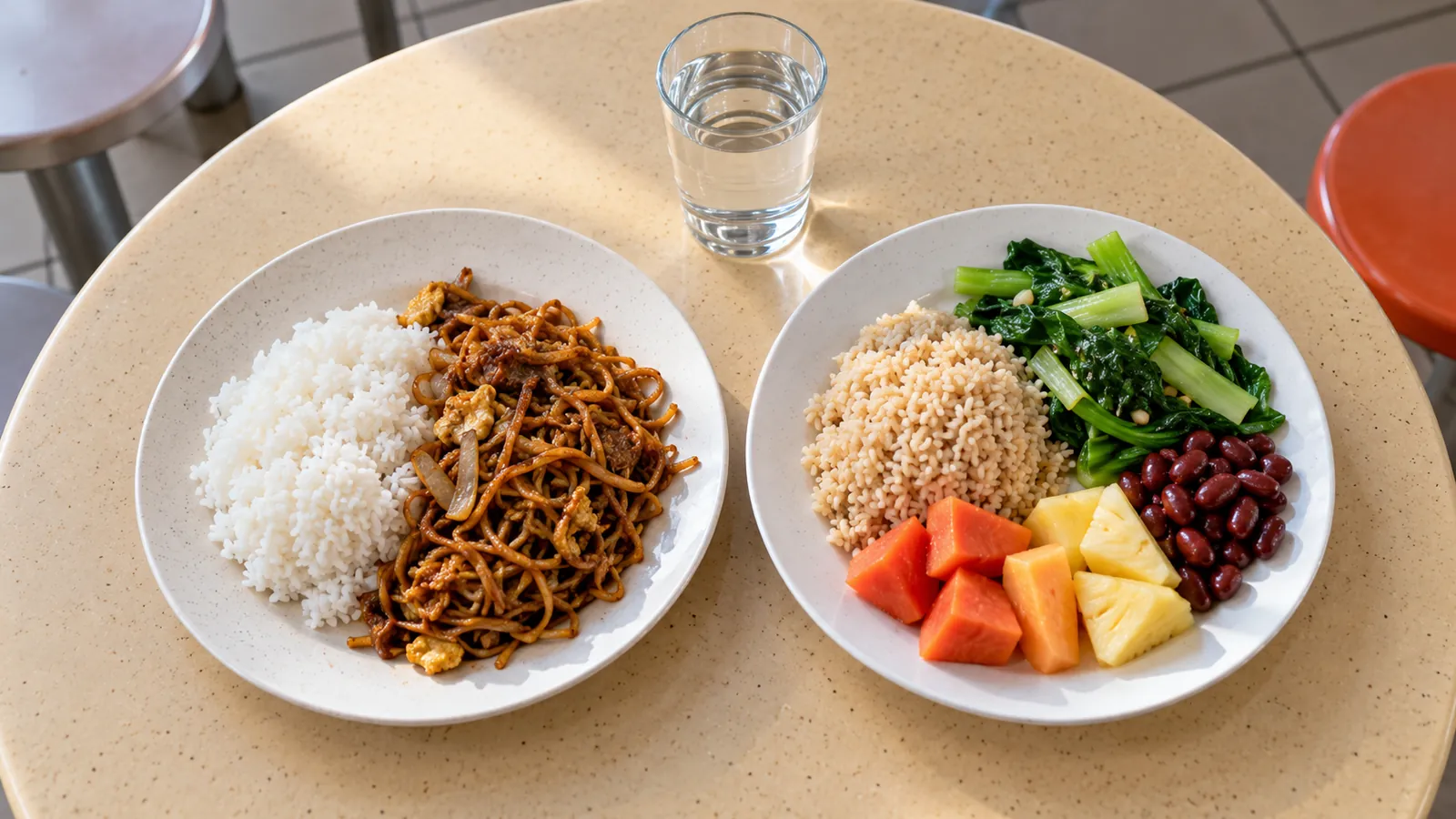
The fibre gap in the average Singaporean diet
HealthHub puts the recommended intake in Singapore at 20 g of fibre a day for women and 26 g for men. SingHealth says the average Singaporean eats about 13 g a day.
Think about a normal week. White rice, noodles, bread, a hawker lunch with barely any vegetables on the plate. Food is still the first place to close that gap, so add greens, fruit, beans and wholegrains where you can. When that’s hard to keep up, a fibre that disappears into what you’re already eating or drinking is the easiest top-up. Each ADVAGEN Prebio sachet gives you 5 g of dietary fibre, according to its label. As a rough example, two a day on top of that 13 g average would bring you to about 23 g.
Which one fits you: four quick checks
- Do you eat fibre-rich food most days? If not, a prebiotic fibre is the natural place to start.
- Has a doctor suggested a probiotic for a specific reason? Then follow that advice, and the exact type they named.
- Will you actually take it every day? Something that slips into a drink or meal you already have is far easier to keep up than something you forget in the cupboard.
- What does it cost per day? ADVAGEN Prebio is SGD 29.60 for 30 sachets in the ADVAGEN shop on 31 October 2026, about SGD 0.99 a sachet. Work out the daily cost of anything you’re considering.
Not sure which fibre to go for? Our guide to psyllium vs inulin vs resistant dextrin compares the main types, and how to choose a fibre supplement shows what to check on any label.
Starting a prebiotic fibre without feeling bloated
The most common surprise with any new fibre is extra wind in the first days. The US National Institute of Diabetes and Digestive and Kidney Diseases explains that gas forms when bacteria in the large intestine break down carbohydrates that weren’t digested earlier, and that’s just what a prebiotic gives them. SingHealth suggests raising fibre over two to three weeks, because a sudden jump can leave you bloated.
With ADVAGEN Prebio, start with one sachet a day, stirred into something you’d have anyway. The directions say adults can take 1 to 4 sachets a day and children half to one, and children under six should see a paediatrician first. Build up within that range and keep drinking through the day.

Who should check with a doctor first
Talk to a doctor or pharmacist before starting any gut supplement if you’re pregnant or breastfeeding, take regular medicines, are managing a long-term condition, or are buying for a young child. With probiotics especially, NCCIH notes that the risk of harm is higher for people who are seriously ill or have a weakened immune system.
And if you notice bleeding, blood in your stool, constant tummy pain or an unexplained drop in body weight, see your GP or a polyclinic. Don’t try a supplement first.
Short on fibre most days?
Start with ADVAGEN Prebio
5 g fibre per sachetNo change in tasteNo gelMixes in an instant
SGD 29.60 for 30 sachets
About SGD 0.99 a sachet. Price checked on 31 October 2026; the shop page shows the current price and stock.
Dietary fibre supplement. Not intended to diagnose, treat, cure or prevent any disease.
FAQ
Which is better, a probiotic or a prebiotic?
Neither wins across the board, because they do different jobs. A probiotic adds live microbes, and what it does depends on the type. A prebiotic fibre gives the bacteria you already have something to use. If your meals are low in fibre, which is common in Singapore, a prebiotic fibre is usually the simpler first step.
Is ADVAGEN Prebio a probiotic?
No. ADVAGEN Prebio is a prebiotic fibre: resistant dextrin from corn. There are no live microbes in it. It’s fibre for the bacteria that already live in your gut, and it doesn’t change the taste or texture of whatever you stir it into.
Can I take a probiotic and a prebiotic together?
They do different jobs, so one doesn’t cancel the other out. If you’re thinking of taking both, or you take regular medicines, are managing a health condition, are pregnant or are buying for a child, ask your doctor or pharmacist first. Either way, start the fibre slowly so your gut has time to adjust.
How much prebiotic fibre should I get from a supplement?
There isn’t one number for supplements, because what counts is your total fibre for the day. HealthHub recommends 20 g for women and 26 g for men. Let food cover as much of that as it can. Each ADVAGEN Prebio sachet gives you 5 g of dietary fibre, and the directions allow 1 to 4 sachets a day for adults. Start with one and build up.
Do I need a supplement if I eat well?
Maybe not. If you’re regularly getting 20 to 26 g of fibre a day from vegetables, fruit, beans and wholegrains, food may already have it covered. A supplement is a top-up for the days your meals fall short. It’s not a replacement for good food.
Where can I buy ADVAGEN Prebio in Singapore?
From the ADVAGEN online shop, where ADVAGEN sells it directly. The shop page always shows the current price and stock.
Sources
- National Center for Complementary and Integrative Health (US). Probiotics: usefulness and safety. Accessed 31 Oct 2026. Link
- HealthHub Singapore. Fibre intake guidance. Accessed 31 Oct 2026. Link
- SingHealth. High fibre diet. Accessed 31 Oct 2026. Link
- NIDDK. Gas in the digestive tract. Accessed 31 Oct 2026. Link
- NIDDK. Symptoms and causes of constipation. Accessed 31 Oct 2026. Link
This article is general information, not medical advice. ADVAGEN Prebio is a dietary fibre supplement and is not intended to diagnose, treat, cure or prevent any disease. Speak to a doctor or pharmacist about your own health.




Share this article: